Comprehensive Houston Welding Inspection for Enhanced Efficiency and Longevity
Checking Out the Basics of Welding Examination: An In-depth Examination of Processes, Devices, and the Importance of Top Quality Control in Welding Industries
Welding assessment works as a keystone in the maintenance of safety and security and architectural integrity throughout various sectors. By checking out the important procedures and devices used in these examinations, one can value the detailed balance between quality assurance and conformity with established standards from organizations such as AWS and ANSI. The approaches utilized, consisting of aesthetic and non-destructive testing methods, are critical in detecting blemishes that could jeopardize the sturdiness of bonded structures. Understanding the effects of these practices elevates important questions regarding their efficiency and the future direction of high quality assurance in welding.
Significance of Welding Assessment
Welding assessment plays a crucial role in ensuring the stability and security of welded structures. It works as a methodical method to examining weld high quality, recognizing prospective flaws, and guaranteeing conformity with well established requirements and specifications. The importance of welding inspection extends past plain adherence to guidelines; it is critical in safeguarding human lives and shielding financial investments in facilities.
Malfunctioning welds can bring about disastrous failings, resulting in substantial financial losses, injury, or loss of life. Therefore, strenuous assessment processes are necessary to identify problems such as inadequate infiltration, porosity, or fractures before they rise right into crucial failings. Furthermore, reliable welding assessment adds to the overall performance and durability of frameworks, guaranteeing that they can hold up against the conditions for which they were designed.
Additionally, the application of welding inspection promotes a culture of top quality and accountability within the welding market. By focusing on evaluation, companies show their commitment to excellence, thus improving their online reputation and competitiveness in the marketplace. Inevitably, welding inspection is not simply a step-by-step step but a fundamental element of design integrity and security guarantee, crucial for the effective implementation of welding projects throughout numerous fields.
Key Evaluation Processes
An extensive technique to welding evaluation entails several essential processes that are crucial for making sure weld top quality and architectural honesty. The first vital procedure is visual evaluation, which enables assessors to identify surface flaws such as cracks, porosity, and improper bead appearance. This method functions as an initial analysis to ensure that the weld satisfies specified criteria.

Furthermore, destructive screening might be done on sample welds to assess their mechanical properties and performance under stress. This process involves tiredness, tensile, and effect testing to confirm that the weld can hold up against operational problems.
Finally, documentation and coverage are important components of the examination process. Keeping precise records of evaluations, observations, and examination results assists guarantee compliance with sector standards and promotes consistent improvement in welding methods. Jointly, these essential procedures develop the foundation of effective welding assessment and quality control.
Devices for Weld Assessment
Numerous devices are vital for efficient weld evaluation, each created to analyze various aspects of weld quality and performance. Amongst the most extensively made use of are visual assessment tools, consisting of magnifying glasses and borescopes, which make it possible for assessors to identify surface area defects such as fractures, porosity, and incorrect blend.
Furthermore, ultrasonic screening (UT) equipment is important for detecting inner flaws. This tool utilizes high-frequency audio waves to reveal gaps within the weld, making certain the integrity of the material. Radiographic screening (RT) tools, which use X-rays or gamma rays, similarly supply understanding into the inner structure of welds, enabling for the recognition of inclusions or spaces.
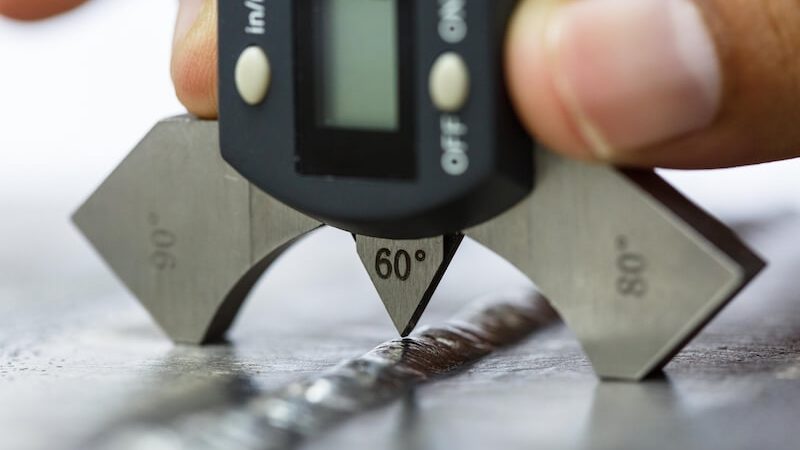
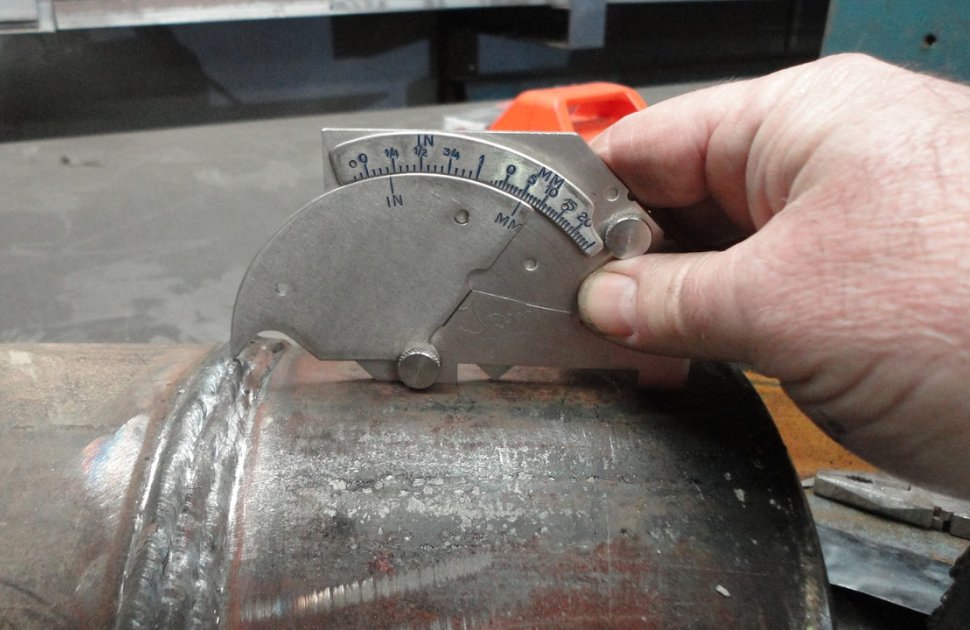
For specific measurements, calipers and assesses play a significant function in making certain and figuring out weld measurements adherence to defined resistances. Firmness testers go to this site examine the mechanical buildings of the weld, guaranteeing it fulfills efficiency standards.
Strategies for Examining Quality
How can the quality of welds be accurately evaluated? A selection of methods are utilized to examine weld integrity and make certain adherence to specified standards.
Ultrasonic testing (UT) is an additional popular method that uses high-frequency acoustic waves to identify interior imperfections within the weld. Houston Welding Inspection. This technique provides a detailed view of the weld's stability without compromising its structural stability. Furthermore, radiographic testing (RT) utilizes X-rays or gamma rays to disclose internal problems, using detailed insights into weld high quality
Magnetic fragment testing (MT) works for finding surface area and near-surface suspensions in ferromagnetic products, utilizing electromagnetic fields and tinted fragments to highlight issues. Dye penetrant screening (PT) can be utilized to reveal surface-breaking problems by using a color that permeates into fractures and is ultimately disclosed.
Compliance With Sector Criteria
Compliance with market requirements is vital for guaranteeing the high quality and security of bonded structures. These requirements, established by organizations such as the American Welding Culture (AWS) and the American National Specification Institute (ANSI), supply guidelines that regulate the welding process, materials, and inspection procedures. Sticking to these standards not only guarantees the structural integrity of welds but also mitigates threats linked with failings that might cause disastrous repercussions.

Welding assessors are entrusted with verifying conformity with these requirements throughout the welding process (Houston Welding Inspection). This includes assessing welding treatments, keeping track of welder qualifications, and conducting detailed assessments of the end product. Non-compliance can cause considerable financial effects, task delays, and damages to a business's reputation
Moreover, compliance cultivates a society of quality control within the company. By developing clear expectations straight from the source and criteria, companies can preserve uniformity in their outcome and boost overall performance. Routine training and updates on standards are necessary to keep workers educated and proficient, making sure that all elements of welding procedures satisfy or exceed regulatory requirements. Eventually, dedication to industry requirements works as a foundation for quality in the welding sector, promoting safety and security and reliability in welded frameworks.
Verdict
In conclusion, welding assessment offers as a crucial component in keeping the security and honesty of welded structures. Adherence to industry standards makes visit the site sure compliance and advertises a society of high quality within the welding sector.
Additionally, the execution of welding inspection promotes a society of top quality and liability within the welding market. Inevitably, welding evaluation is not just a procedural action but an essential part of engineering honesty and security assurance, important for the successful implementation of welding tasks across numerous industries.
A thorough approach to welding examination includes several vital processes that are crucial for ensuring weld high quality and architectural stability. These criteria, developed by organizations such as the American Welding Culture (AWS) and the American National Criteria Institute (ANSI), supply guidelines that control the welding procedure, products, and assessment methods.Welding examiners are entrusted with verifying conformity with these criteria throughout the welding procedure.